Floor First, Machine Second
Built-ins, panel-fronts and portables all ride the same checklist, whether the kitchen dates from the Eisenhower administration or last spring.
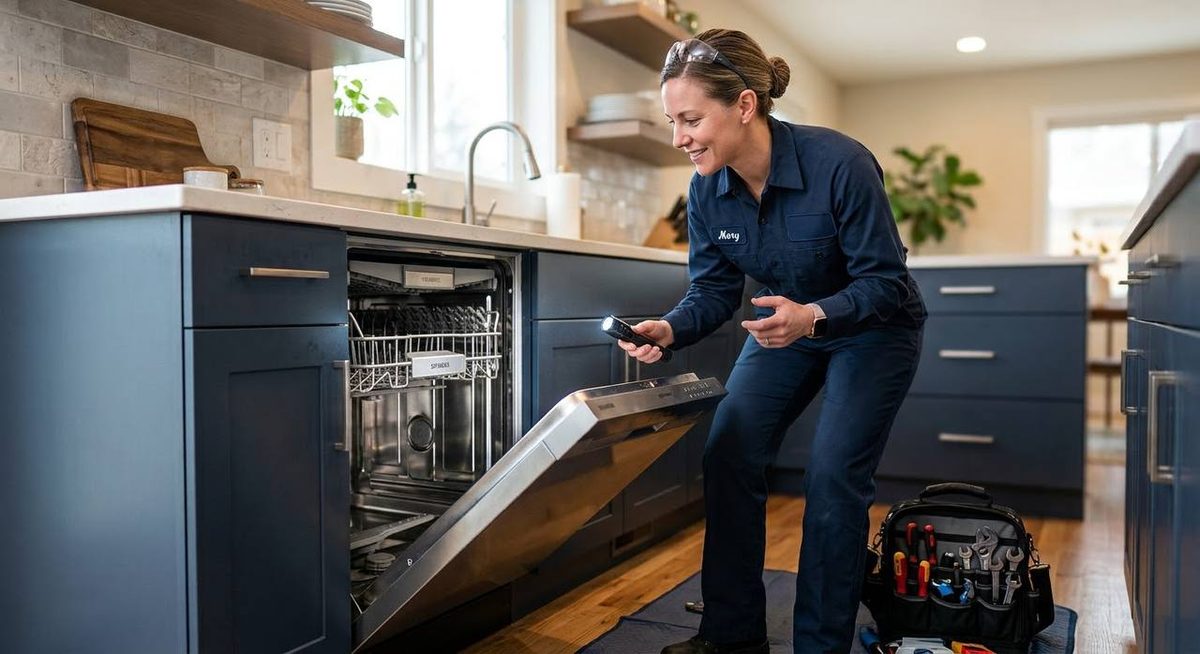
With the kick plate off, the base pan tells the machine's real history — old mineral tracks, fresh moisture, rust on the frame feet. Then a monitored cycle runs while fill level, spray pressure, drain pace and door behavior each get checked off. Faults found this way are found small.
Soft water changes the dishwasher story in this county: the film on your glasses is almost never scale and almost always over-dosing. Some visits end with the honest news that the machine is fine and the detergent measure is not — no parts, small invoice, problem gone.
Pumps, valves, arms, latches, gaskets and control boards are all truck-stock or next-day. A cracked tub is the one verdict with no good repair, and when the checklist finds one we say retire, in writing, rather than billing hours against the inevitable.
What the Intake Call Hears
- Sump holding water after the cycle ends
- Glassware fogged or gritty out of the top rack
- Anti-flood switch tripping and locking the controls
- Drips tracking from a door corner onto the kick plate
- Wash cycle stretching past three hours
- Detergent pod left half-dissolved in the door
Book This Routine
Model number welcome, plain words fine.