Home/Services/Refrigerator Repair
Refrigerator Repair

Refrigerator Repair — University Place & Tacoma

Every refrigerator that stops cooling gets the same eleven-point cold-side routine, in the same order, every time: compartment probes in first, then the frost pattern, the condenser, the fans, the damper, the amp clamp on the compressor. Routine sounds boring — it is also why the fault rarely hides from us past the first half hour.

The Cold-Side Routine, Step by Step

No-cool calls are triaged ahead of everything else on the day sheet. Ring before 10am on a weekday and the odds of a truck in your driveway that same afternoon are good anywhere from Fircrest to the Gig Harbor side.
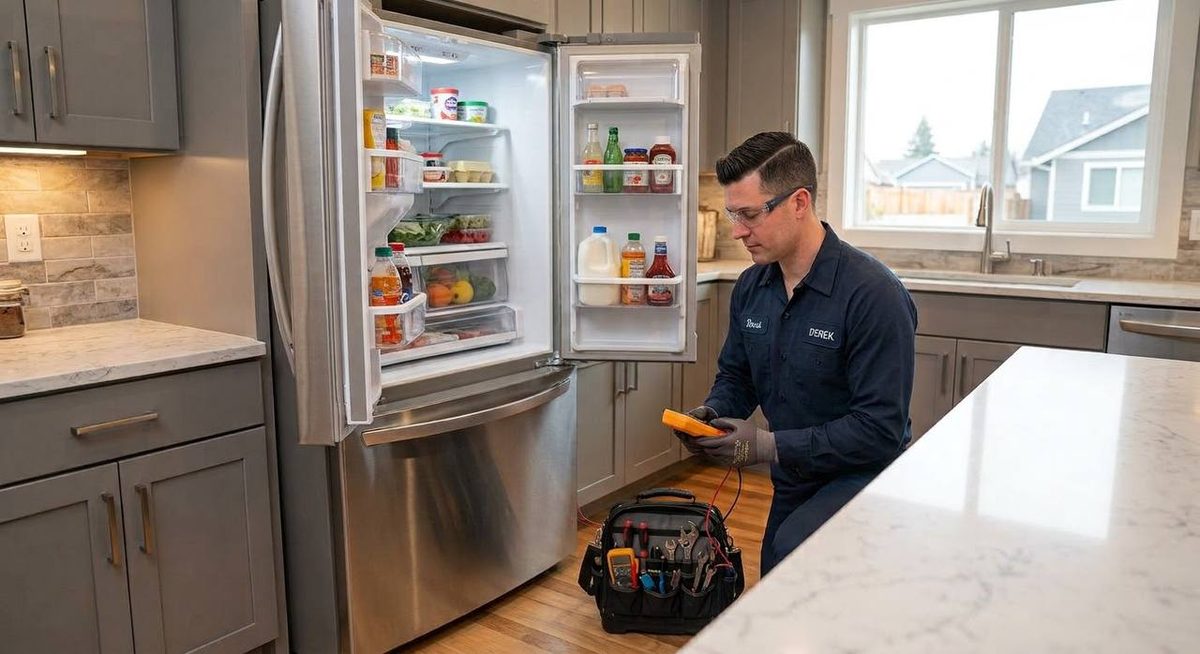
Derek metering a French-door refrigerator with both doors open and the tool bag staged
Derek logging cold-side readings on a French-door — the probes speak before anyone does.

Numbers come first, opinions second. Probes log both compartments while the condenser and fans are inspected, and the compressor gets an amp reading against its nameplate. Only when the readings disagree with the spec does a panel come off. That discipline is the difference between replacing the part that failed and replacing the part that was easy to reach.

Around this territory the usual verdicts are: defrost circuits that gave up quietly, start devices baked by garage summers, condensers packed with dog hair, and gaskets worn to ribbon on the hinge edge. The truck carries the common start devices, thermostats, defrost kits and fan motors, so most cold-side verdicts get executed on the first visit.

If the routine points into the sealed system — refrigerant loss, a compressor that fails its winding test — you get that verdict on paper with a repair price and our frank read on whether the cabinet has earned the spend. Some have. Some have not. The job sheet says which, and why.

What the Intake Call Hears

  • Milk spoiling ahead of its date while the freezer holds
  • Clicking from the back panel every few minutes
  • Ice rink forming under the freezer basket
  • Doors popping themselves open or refusing to seal
  • Running non-stop yet never reaching set temperature
  • Puddle appearing at the toe grille each morning

Book This Routine

Model number welcome, plain words fine.
Before you book

The Three Questions That Precede It

A warm fridge — how fast can you realistically be here?

No-cool calls jump the day sheet. Weekday mornings we can usually land same-day between Fircrest and the harbor side; afternoons roll to the next morning's first slots.

Do you repair French-door and bottom-freezer models?

All layouts — French-door, bottom-freezer, side-by-side, top-mount, plus compacts and kegerators. The routine is the same; only the panel screws move around.

What if the fix costs more than the fridge is worth?

Then the job sheet says so in plain numbers and we stop there. We sell repairs, not heroics — a written no is part of the service.

This Standard, Street by Street

Refrigerator Repair runs across the whole territory — each community’s page carries the local specifics.

Shift log

Frames From the Day Sheet

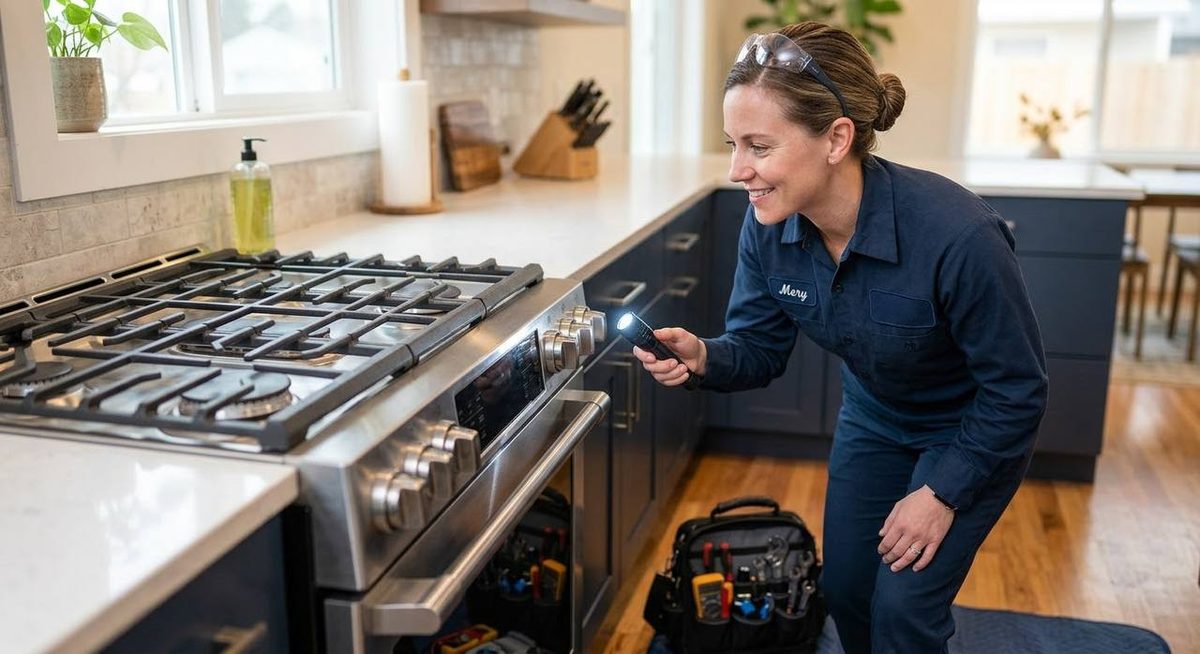
Mary inspecting the control side of a stainless gas range with a flashlight, tool bag open on the floor
Mary reading a gas range’s control cluster — light first, meter second, verdict last.
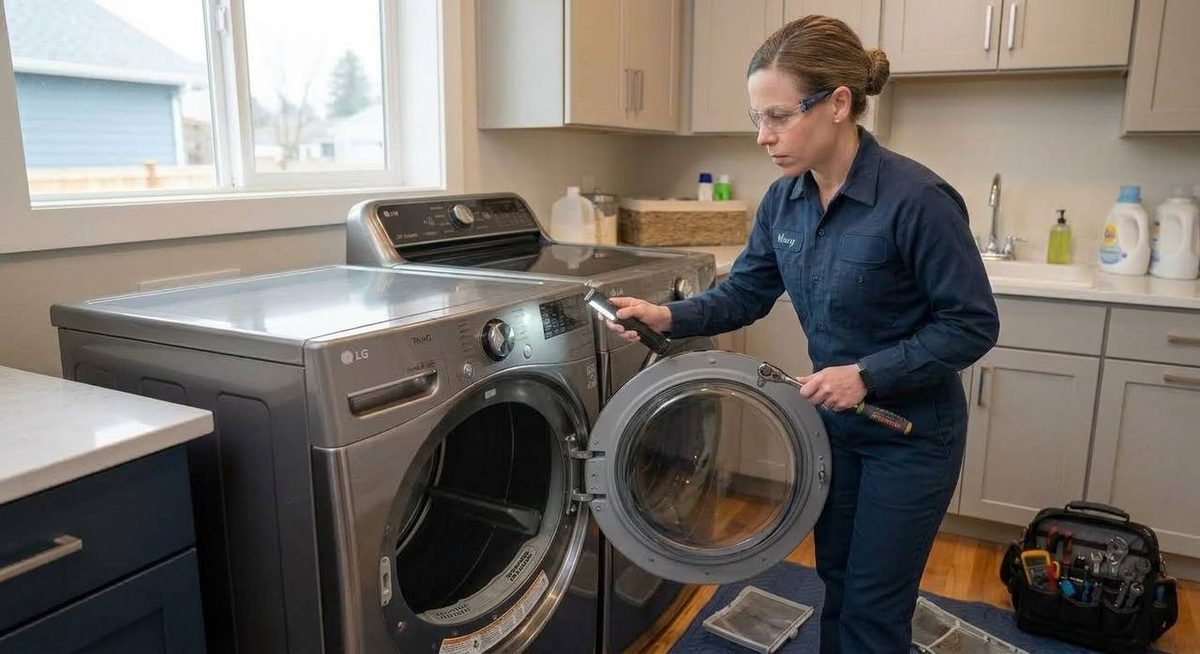
Mary checking the drum and door of an opened dryer beside its matching washer
Door off, drum checked — the forty-minute standard starts with eyes on the hardware.
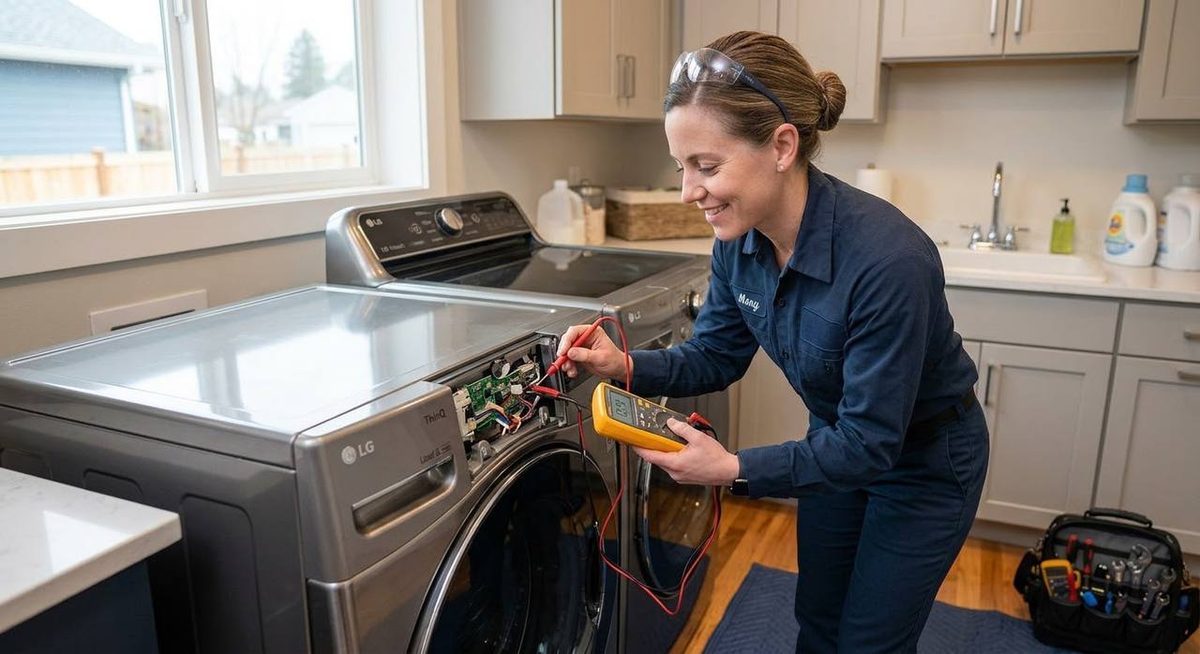
Mary testing a washer control board with a multimeter through the open service panel
Meter on the washer’s board — the reading decides, not the guess.
Derek metering a French-door refrigerator with both doors open and the tool bag staged
Derek on a cold-side call — probes logged before a single panel comes off.
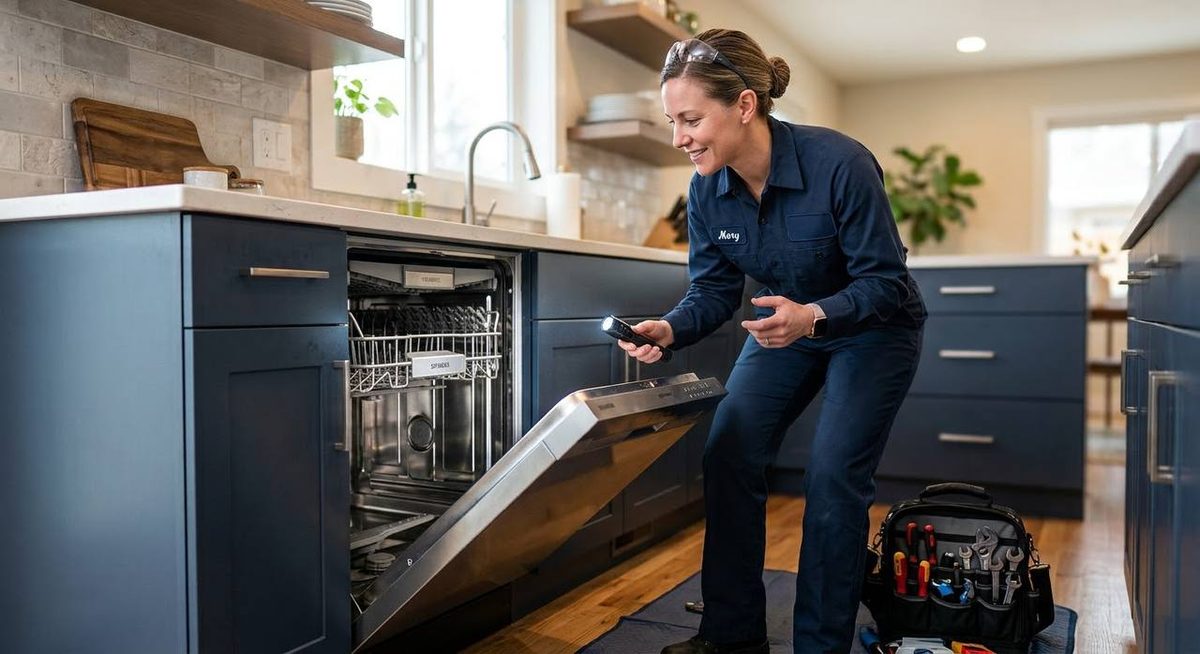
Mary examining an open dishwasher rack with a flashlight in a navy kitchen
Racks out, rails lit — dishwasher faults get caught while they are still cheap.