Four Lanes, One Standard
Top-load, front-load, stacked, compact: all lanes covered. The 98467 shop sits mid-territory, so washer calls rarely wait long for a slot.
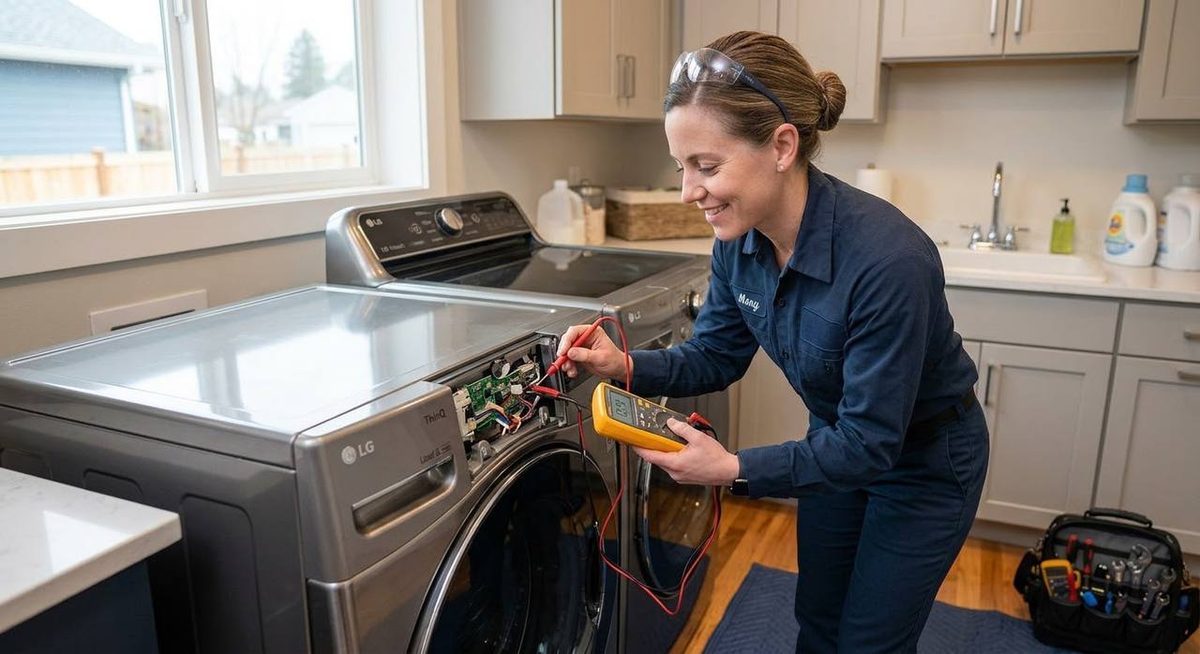
Leaks get dye-and-towel traced to their true origin before a single part is quoted — fill path, dispenser, tub seals and pump each get ruled in or out, because two leaks that wet the same square foot of floor can differ in cost by a factor of five.
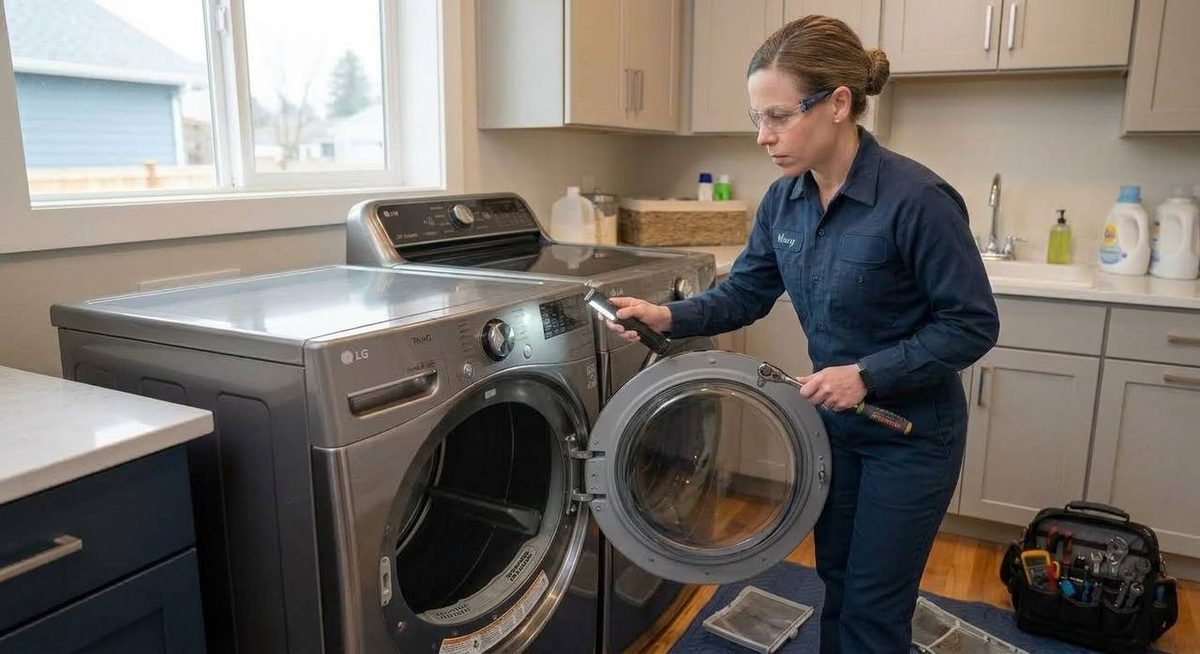
Spin complaints get the suspension and bearing check as a set, with the drive components inspected while the cabinet is open. Wear parts on a washer retire in groups; changing one and ignoring its shift-mates is how a machine comes back on the schedule six months later, and we would rather not see yours twice.
One local note: this territory drinks some of the softest municipal water in the country, and the most common 'washer fault' on our job sheets is actually a decade of double-dosed detergent — film on sensors, funk in the boot, suds tripping the drain logic. When that is your story, the visit ends with a dosing card instead of a parts bill.
What the Intake Call Hears
- Water creeping out during fill or drain
- Cycle freezing at the same minute mark every load
- Spin cycle audible from the next room and getting worse
- Clothes coming out soaked after a completed cycle
- Softener drawer growing residue or backing up
- Lid lock blinking and refusing to release
Book This Routine
Model number welcome, plain words fine.