Triage for Cold Storage
Ice makers get the opposite honesty: nobody's dinner is at risk, but a machine that quietly stopped making ice weeks ago deserves better than a shrug. They are modular, testable, and almost always fixable in one visit.
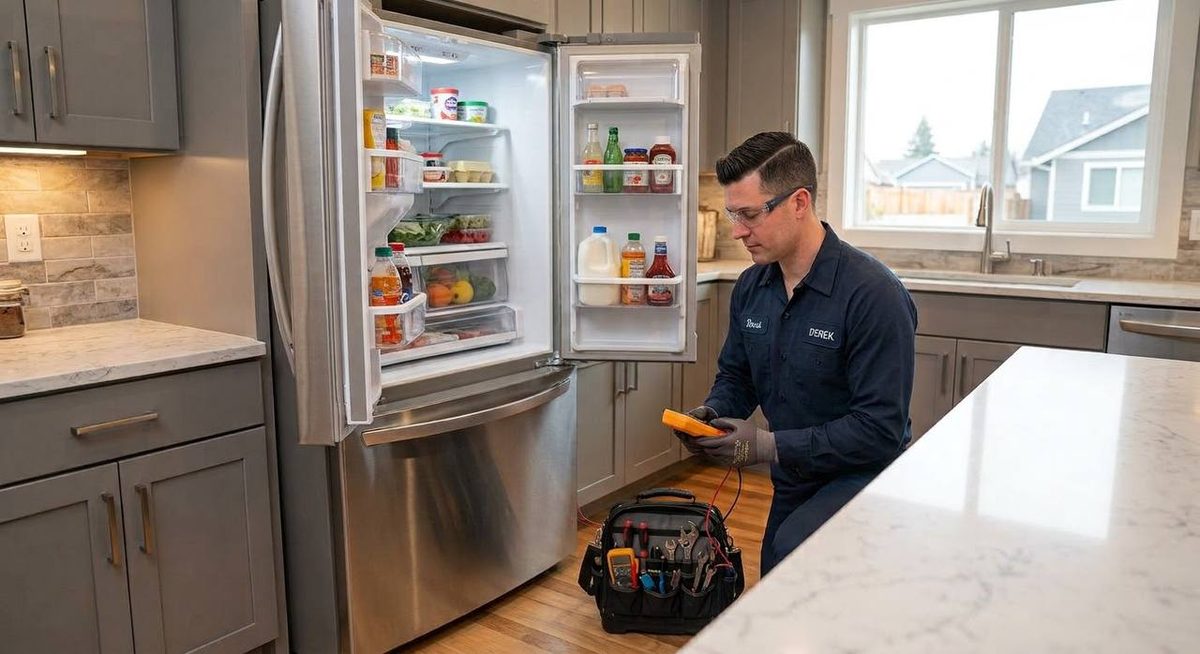
Freezer diagnosis runs the same measured routine as refrigeration — temps, frost pattern, compressor draw — with a garage-install check bolted on, because half this territory's freezers live in garages that swing well outside the cabinet's rated ambient range. Sometimes the machine is failing; sometimes the garage is. The readings say which.
Ice maker work walks the water path end to end: valve, fill tube, filter age, module test, harvest observation. Replacing modules on faith is how other outfits do it; measuring first is why our ice-maker repeat rate stays boring.
Old chest freezers with sealed-system failures get the honest arithmetic — the repair number, the cabinet's age, and a plain recommendation. A thirty-year-old chest that just needs a start relay, though, is one of the best repair bargains in the trade, and we fix plenty.
What the Intake Call Hears
- Upright drifting warm while the compressor never rests
- Frost carpeting one wall of the cabinet
- No fill hum, no harvest sound, empty bin
- Cubes shrinking, hollowing, or tasting of the filter
- Bin contents welded into one iceberg
- Garage unit fine in April, failing in August
Book This Routine
Model number welcome, plain words fine.