Home/Services/Dryer Repair
Dryer Repair

Dryer Repair — University Place & Tacoma

Our dryer standard is simple: a healthy machine should finish a mixed load in about forty minutes. Anything slower is a fault — in the machine or in the duct behind it — and the job is to find out which with instruments, not by throwing an element at it.

The Forty-Minute Standard

So the first tool out of the bag on any dryer call is the airflow gauge, not the screwdriver. It reads the duct in a minute and settles half the diagnosis before the drum ever comes out.
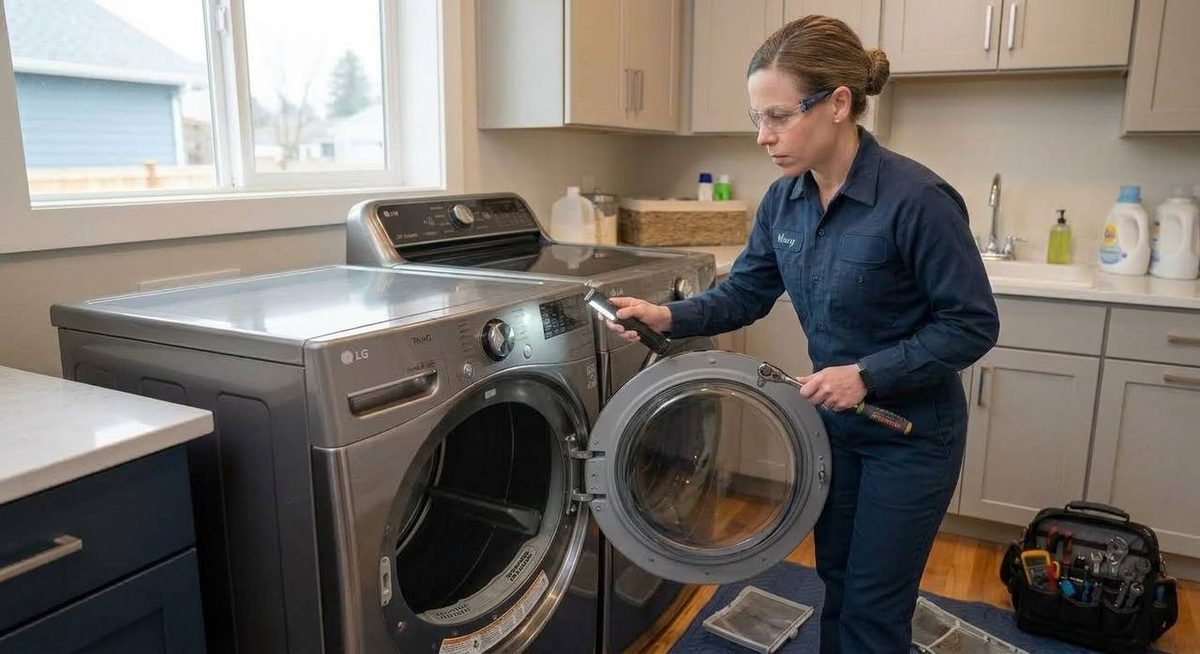
Mary checking the drum and door of an opened dryer beside its matching washer
Mary with the dryer open beside its washer — hardware eyeballed, airflow gauged, then parts.

When airflow reads within spec, the fault is inside: element or igniter, thermostats, fuse, moisture sensing, drive. Each gets meter-tested against its rating, and only the component that fails its number goes on the quote. When airflow reads choked, the honest fix starts at the duct — and we say so before selling anything, because an element behind a blocked vent is a repeat appointment wearing a disguise.

Noise work follows the same group-replacement logic as washers: rollers, idler and belt wear as a crew, get inspected as a crew, and get quoted as a crew when the wear says so.

Gas dryers get the full burner-chain test — igniter draw, coil response, flame sense. Anything upstream of the machine's gas valve is plumber territory, and the job sheet will route you there when that is the truth.

What the Intake Call Hears

  • Loads needing a second run to finish dry
  • Heat that quits mid-cycle then returns after cooling
  • Grinding or thumping tied to drum speed
  • Breaker or thermal fuse tripping repeatedly
  • Burning smell on the high-heat setting
  • Gas unit glowing but never lighting

Book This Routine

Model number welcome, plain words fine.
Before you book

The Three Questions That Precede It

Every load takes two runs now. What number tells the story?

The static-pressure reading at the transition. In spec: the fault is internal and we test components. Out of spec: your duct is the patient, and no part will fix it.

Can you service the vent run itself?

The reachable sections, yes — cleared and re-secured during the visit. A fully buried house run is duct-trade work, and we will tell you plainly when yours crosses that line.

Electric versus gas — do you take both?

Both, daily. Gas work stops at the appliance valve; beyond it belongs to a plumber, and we route honestly rather than dabble.

This Standard, Street by Street

Dryer Repair runs across the whole territory — each community’s page carries the local specifics.

Route evidence

Yesterday’s Stops, Documented

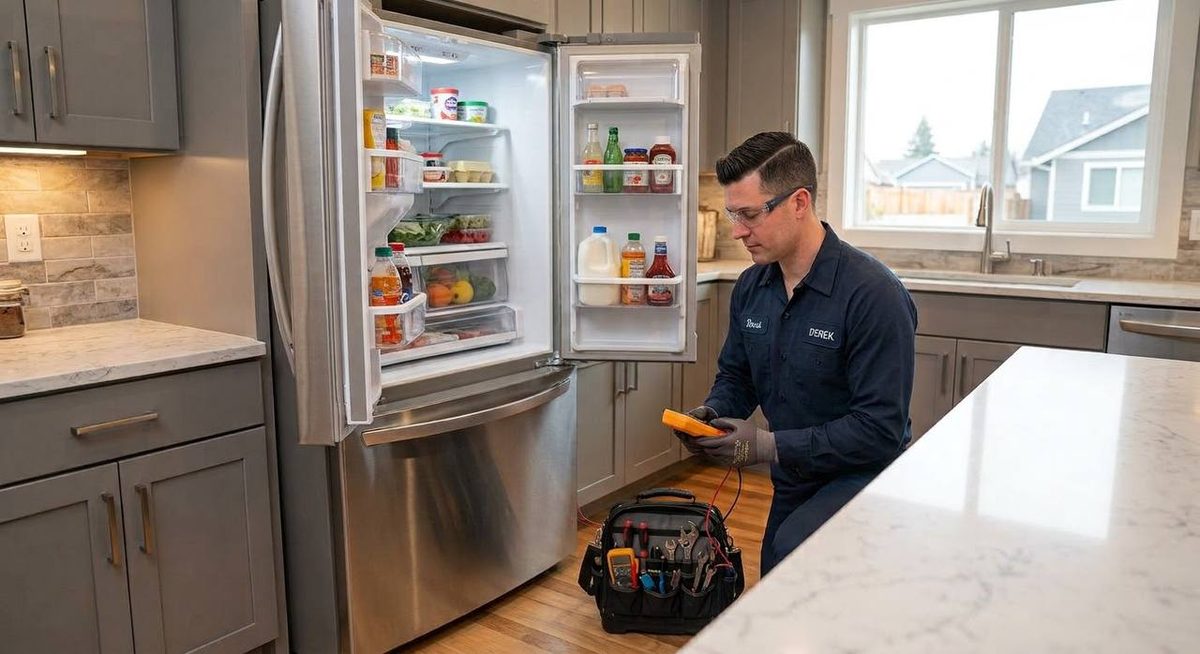
Derek metering a French-door refrigerator with both doors open and the tool bag staged
Derek on a cold-side call — probes logged before a single panel comes off.
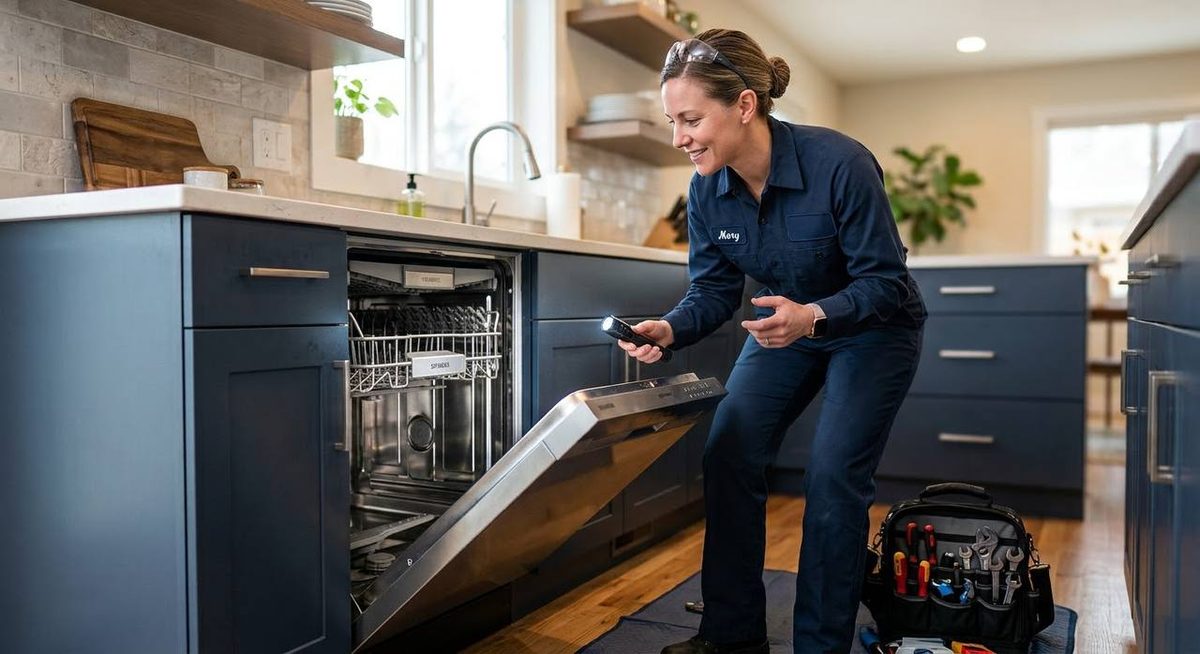
Mary examining an open dishwasher rack with a flashlight in a navy kitchen
Racks out, rails lit — dishwasher faults get caught while they are still cheap.
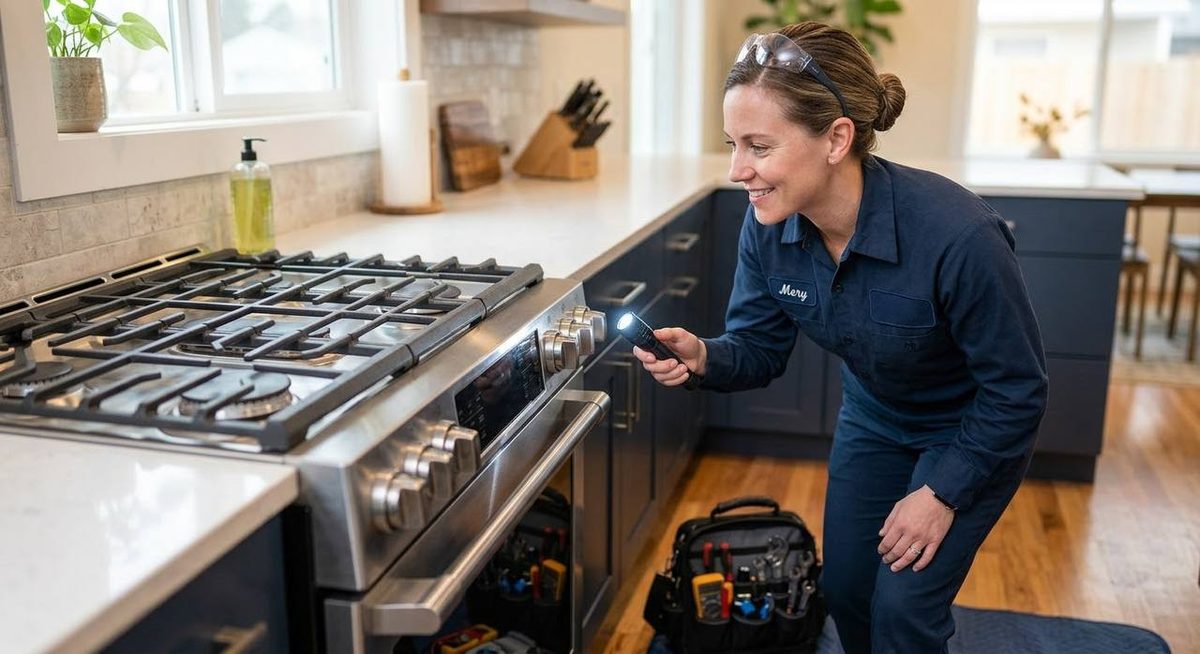
Mary inspecting the control side of a stainless gas range with a flashlight, tool bag open on the floor
Mary reading a gas range’s control cluster — light first, meter second, verdict last.
Mary checking the drum and door of an opened dryer beside its matching washer
Door off, drum checked — the forty-minute standard starts with eyes on the hardware.
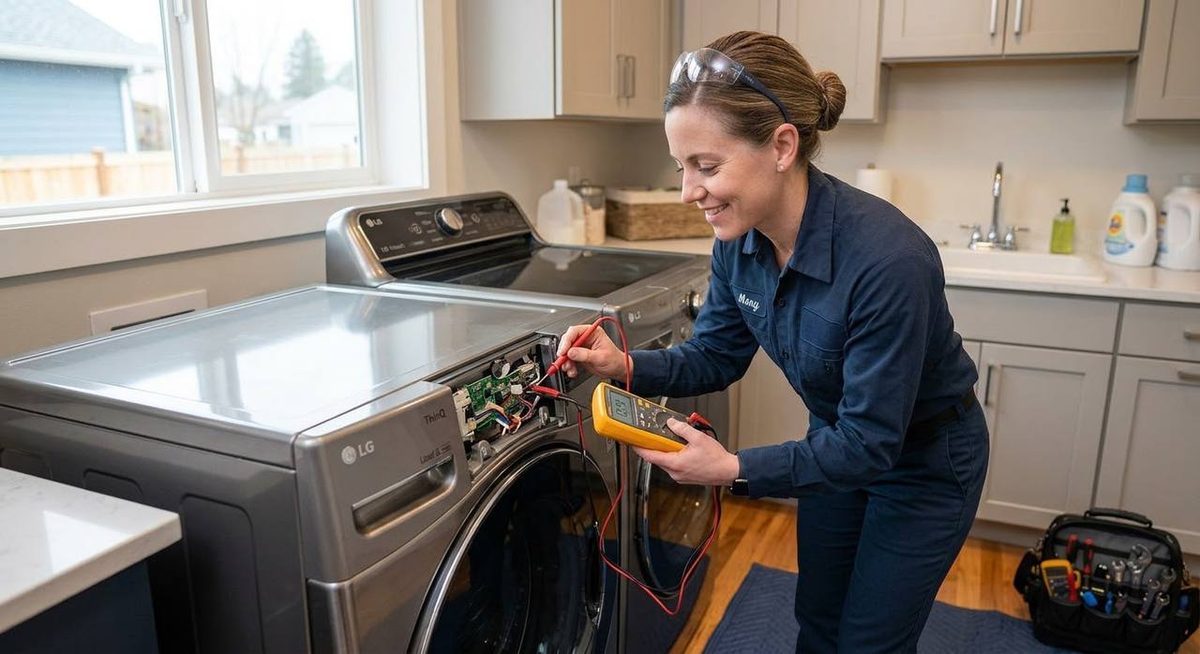
Mary testing a washer control board with a multimeter through the open service panel
Meter on the washer’s board — the reading decides, not the guess.