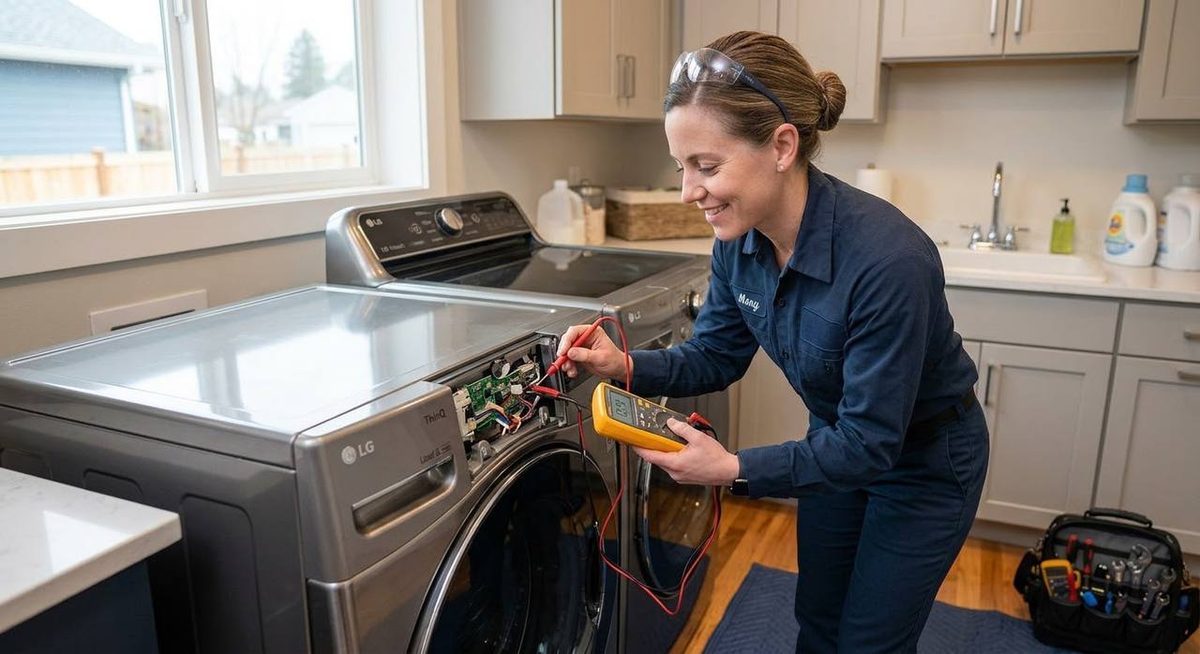
Our 98023 dryer routine therefore starts at the exterior wall, not the laundry room, and rides the scheduled cul-de-sac leg from our University Place shop.
The Termination Inspection
Every 98023 dryer call includes a walk to the outside termination: hood condition, flapper swing, screen state, nest evidence. Half the slow-dry complaints on this side end right there — cleared, screened against the next tenant, airflow re-verified to spec, no internal parts touched.
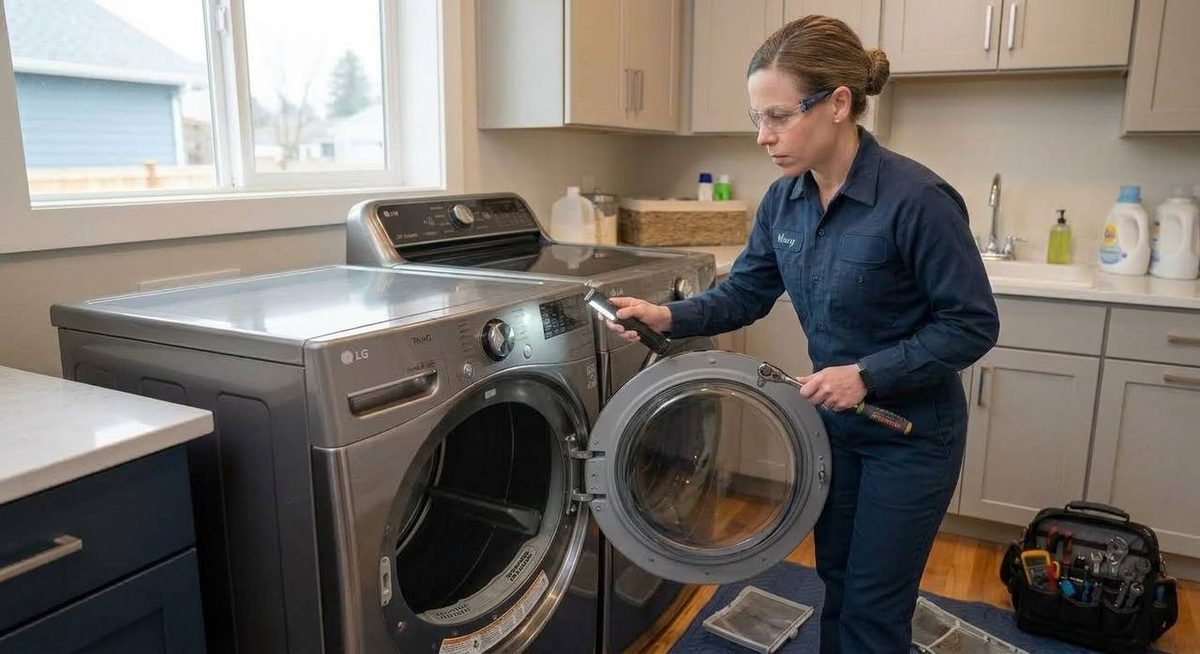
The Twin Lakes originals add a second thread: mid-70s electric dryers on original circuits, still running and still worth running. Their heating faults are simple and their parts cheap; the job sheet treats them as the sound investments they are.
Beyond the termination work, 98023 dryers earn one more seasonal note on their job sheets: fall. The same canopy that nests in spring sheds in October, and a hood cleared in May can pack again with needle fall in a single windy week. We mark the recommended re-check month on the sheet based on your actual tree cover — some loops need one clearing a year, the deepest-shaded cul-de-sacs genuinely need two. Owners who follow the month on the sheet mostly stop needing us for airflow at all, which is the point.
Openers From the Call Log
- Grinding or thumping tied to drum speed
- Breaker or thermal fuse tripping repeatedly
- Burning smell on the high-heat setting
- Gas unit glowing but never lighting
Dryer Slot in Federal Way
Code on the display? Send it along — it pre-loads the truck.